When Your AI is Confidently Wrong

After reading this article, you will be able to develop practical steps to address AI uncertainty.
SUMMARY:
Clinical uncertainty is a major challenge, especially with AI responses
AI algorithms are designed to provide a response presented with confidence, even though the evidence may be conflicting.
AI tools do not disclose the degree of response certainty (or uncertainty)
Clinicians need to be aware of this limitation, especially as the clinical decision-making risk increases.
Certainty vs Uncertainty
Uncertainty:
Occurs with a lack of, vague, or ambiguous information.
Uncertain situations occur with the lack of necessary, reliable information to assess the situation, weigh various options, and make an informed decision.
Certainty:
Is NOT the absence of not knowing
Having enough information to assess the situation and make predictions with high reliability
Absolute Uncertainty & Total Certainty are Never Attainable

The “3S” of Healthcare Innovation
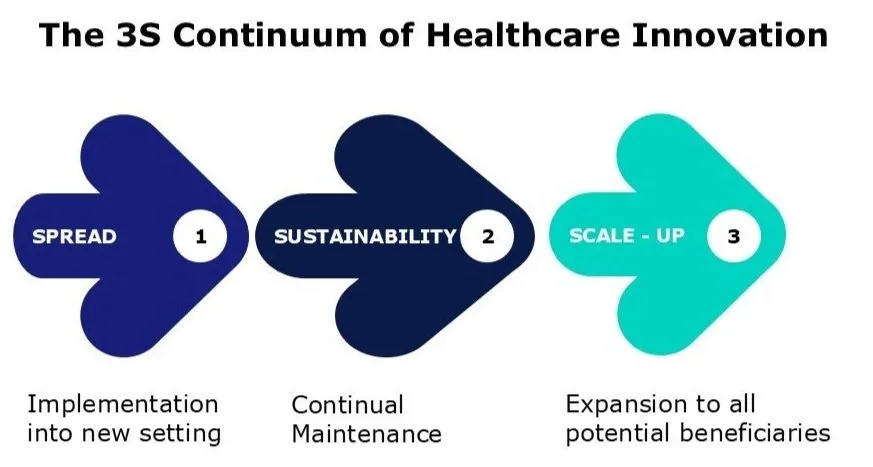
The 3S is a continuum of challenges needed to enable innovation within healthcare
It is unpredictable and dynamic
Spread: Communication approaches of an innovative implementation in a new setting
Sustainability: Implementation is a time-limited event.
Once implemented, sustainability becomes continual within a clinical setting, with an undefined timeframe
Scale-Up: Innovation expanded to reach all potential beneficiaries of the innovation
There is a lack of a standardized approach to integrating a 3S innovation
The Nonadaptation, Abandonment, Scale-Up, Spread and Sustainability Model (NASSS)
Identifies factors influencing implementation success in digital health
6 domains
Each domain may vary in the level of challenges from:
Simple: straightforward, predictable, with few components
Complicated: multiple interactive components
Complex: dynamic, unpredictable, interrelated components
NASSS Components
Condition: Only a small percentage of clinical conditions are low enough risk or predictable enough as suitable for technology
Technology:
The necessary inputs & outputs
Many models are less than optimally developed (features, size, usability)
Evaluate dependability: data accuracy, transparency for recommendations, interpretability
Knowledge needed for and ease of use of the system
Customization of the system for specific uses
Value: What is the value provided to users and health system?
Designed the way the intended user works
Organizational:
System capacity and readiness for uptake and scale-up
Budget availability
Leadership support
Supports workflow changes
Adopter System (Staff, Patient, Caregiver)
Address staff concern of scope of practice and patient safety
Patient/Caregiver Concern: Training and knowledge to adequately use the system
Sociocultural: Health policy, fiscal policy, legal and regulatory policies
Artificial Intelligence (AI) Challenges for Certainty
AI Large Language Models (LLMs) generate conclusions on statistical probability.
AI-LLMs do not know what they don’t know
Despite conflicting evidence, a confident response may be provided without disclosing the model's inability to furnish a valid prediction.
PRACTICAL STEPS
Lack of Clinical Evidence
Most health systems struggle to develop proper evaluation & monitoring of AI algorithms.
Processes typically focus on safety & process compliance and not effectiveness
SOLUTION:
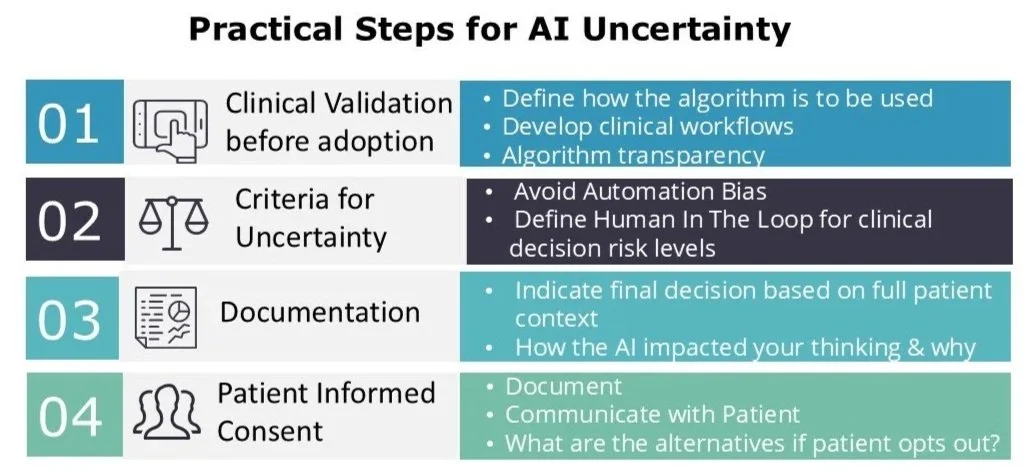
Focus on how the innovation will be used
Develop clinical workflows
Understand the underlying technology and how it uses data – algorithm transparency
2. Criteria for Uncertainty
How should AI tools indicate uncertain outputs?
When critical information is missing
When there is conflicting evidence
When the recommendations are of low confidence
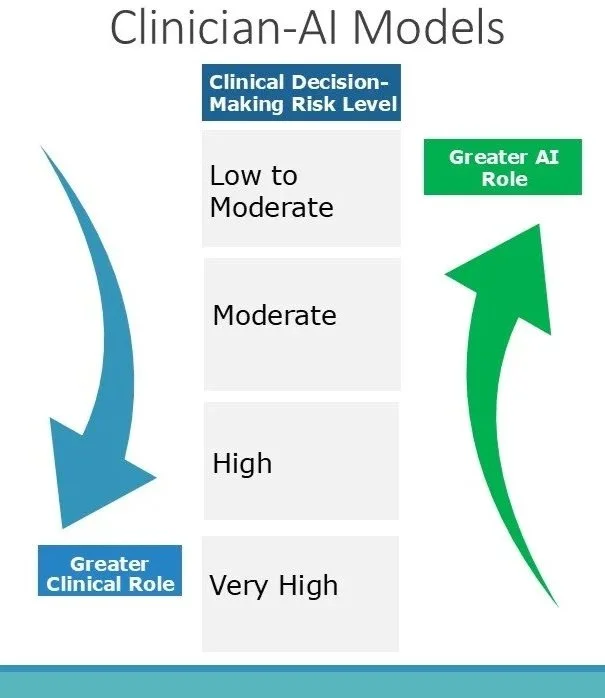
Higher clinical states of stability, acuity, and severity warrant higher clinical involvement
Avoid:
Checkbox-driven documentation
Automation bias: Trusting and following automated outputs without evaluation
SOLUTION:
Define Human in the Loop pathways for clinical decision risk levels of:
Low to Moderate
Moderate
High
Very High
3. Documentation
Clinician(s) remain the final checkpoint and maintain accountability
Mandatory review before signature
SOLUTION
Documentation should include:
Final decision based on full patient context
How the AI recommendation impacted your thinking and why
4. Patient Informed Consent
SOLUTION
Communicate with patient
Document-informed consent
Alternative options
CONCLUSIONS:
AI algorithms are not designed to provide “I don’t know” responses.
Clear guidelines should define when and how a clinician evaluates confidence in AI outputs.
Processes should be developed as to:
When outputs are reviewed
Who reviews them
How quickly the review occurs
What documentation needs to occur
The degree of uncertainty