The True Value and Challenges of AI Scribes

After reading this article, you will be able to describe the functions improved by AI scribes, those unaffected by AI scribes and the remaining challenges.
SUMMARY:
Artificial intelligence (AI) scribes that use generative AI to passively capture clinical conversations and draft visit notes in real time have seen rapid adoption in practice.
AI scribes offer promising solutions to address documentation burden, workflow streaming, and clinical burnout.
Current evaluations demonstrate reductions in documentation tasks and unchanged impact on other outcomes.
DOCUMENTATION DATA
Various studies evaluate total documentation time per consult, time spent on notes, and mean time per note.
Time savings range from 18 seconds to 21.6 minutes (P<0.05)
Documentation length significantly increases (P=0.01)
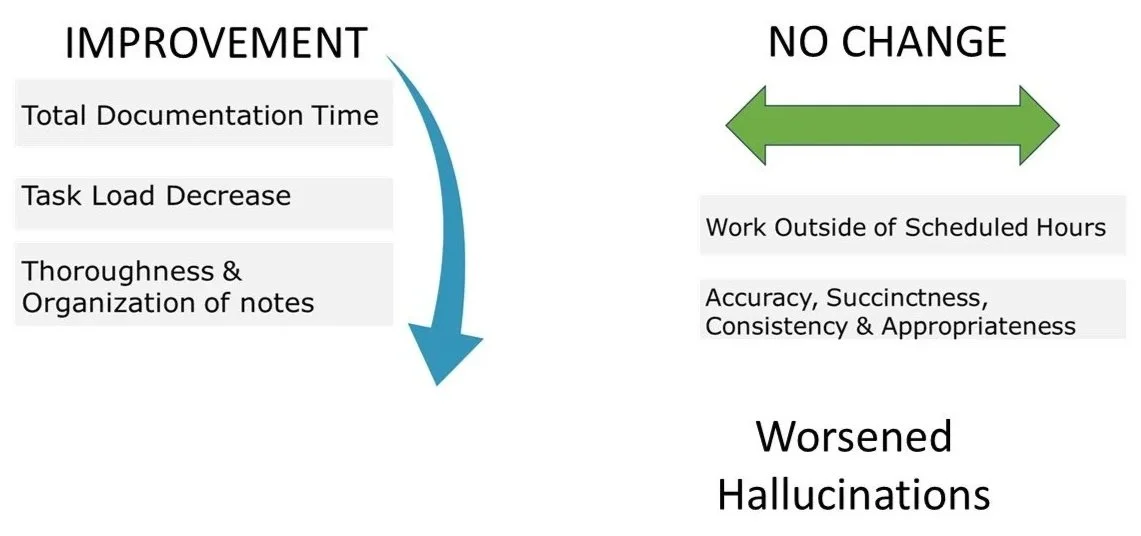
Documentation task load decreases (P=0.001)
Total EHR time did not improve (decrease 5.6 minutes – non-statistically significant)
Thoroughness and organization of notes range are significantly improved with an AI scribe (P<0.05)
AI Scribe Dose Response Curve
Using the AI scribe in greater than 50% of patient encounters resulted in greater time savings versus non-users.
The exact amount of use to see a benefit in time savings is unknown.
WHAT WE DO NOT KNOW:
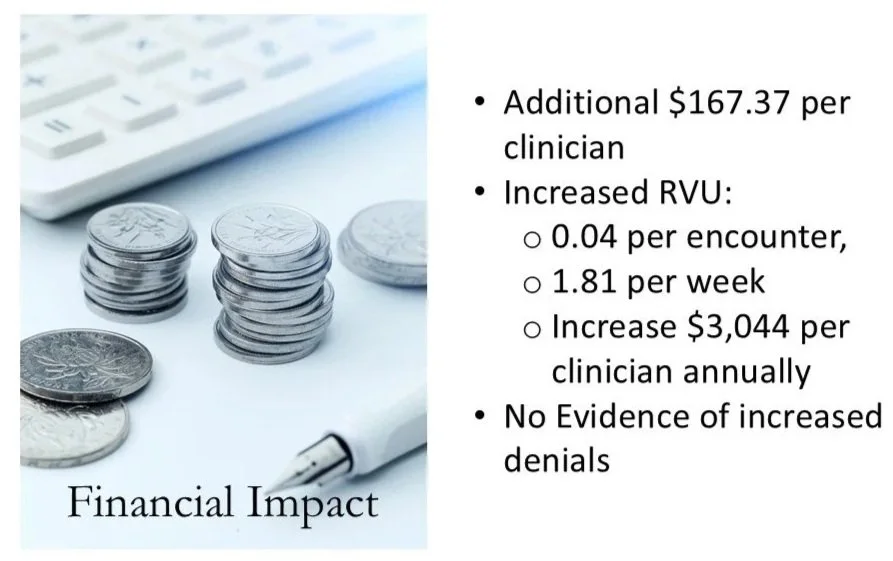
Do AI scribes contribute to increased provider productivity?
Does the time saved by AI scribes translate into measurable improved outcomes?
Is there an association between documentation time saved and decreased clinician burnout?
CONCLUSIONS:
Per clinician time savings may be modest, but become substantial in the aggregate.
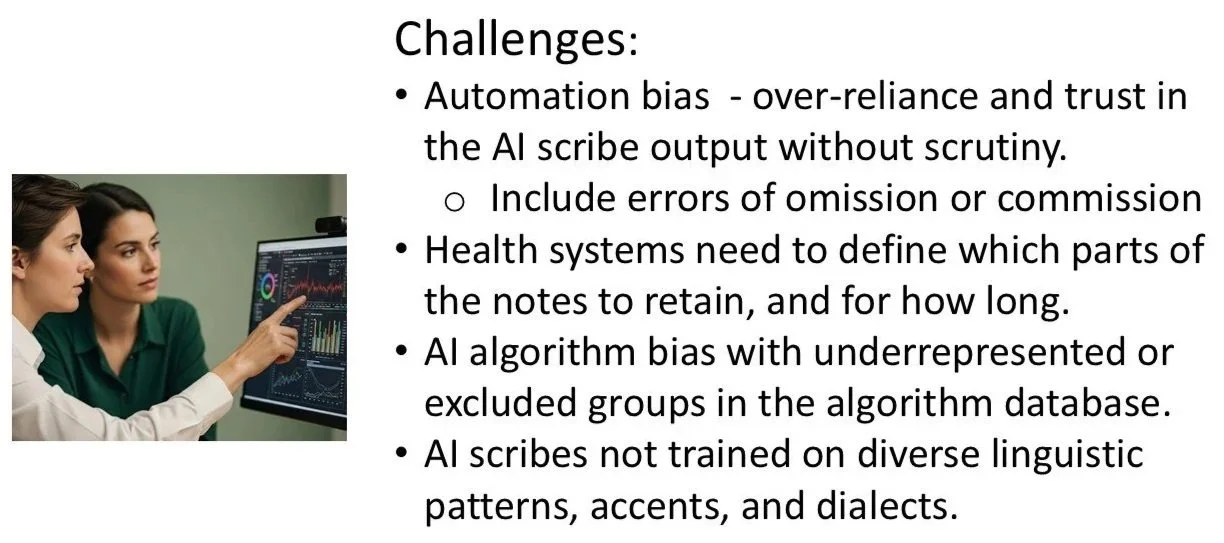
Limited data on converting time savings into patient experience, patient outcomes and clinician burnout rates.
Do the time and cost savings of AI scribes translate to changes in care delivery and higher-quality care?
How should patient informed consent occur and be documented?
What steps should occur if a patient refuses informed consent