Clinical AI Post-Deployment Fragility

After reading this article, you will be able to describe why initial validation data does not guarantee post-deployment reliability and proposed solutions forearly identification.
SUMMARY:
Pre-deployment validation is common for safety and effectiveness, but it does not guarantee stability post-deployment.
Once incorporated into varying everyday clinical workflows, the potential for performance degradation exists.
Appropriate monitoring strategies for early identification of signal deterioration are key to maintaining desired outcomes.
Validation Approaches
Static Validation: As models are developed, testing on retrospective data is used as evidence of reliability.
Practice Validation: 3 forms
Internal validation: Sample set differs from algorithm training data
Temporal Validation: Data from a later time window within the same system
External Validation: Differing settings
Dataset Shift:
Clinical algorithm deployment rarely preserves the initial conditions they were introduced into.
Healthcare dataset shifting may occur due to :
Changes in care delivery workflows
Documentation processes
Clinical incentives
Random variation
This creates the opportunity for silent, slow performance degradation
Terms
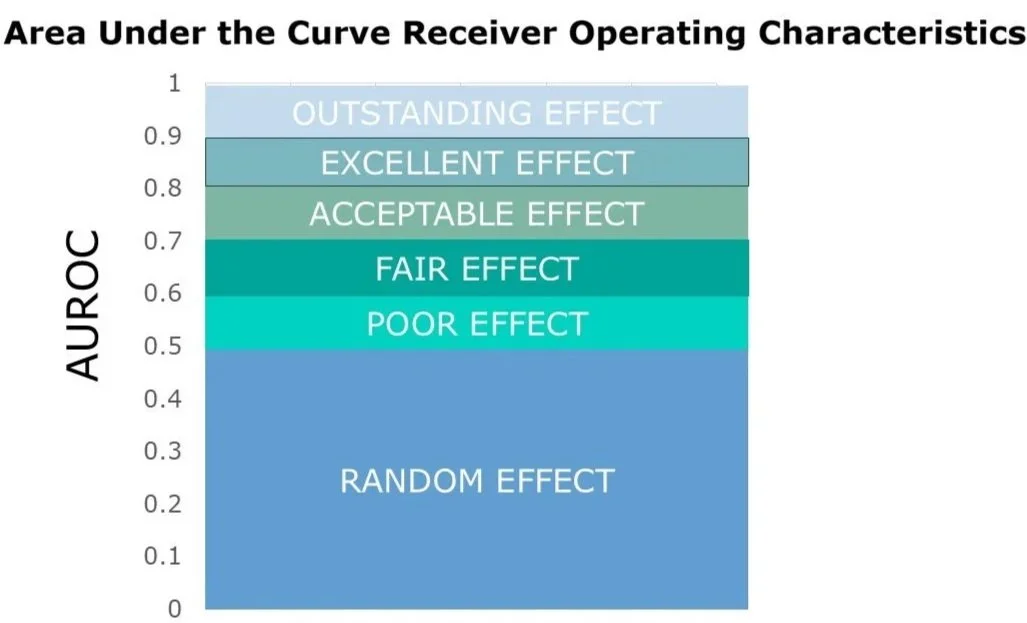
Discrimination:
Ability to identify patients who will vs will not experience the outcome
Rank patients based on risk level
Calibration:
Demonstrates if the model's predictions are numerically accurate.
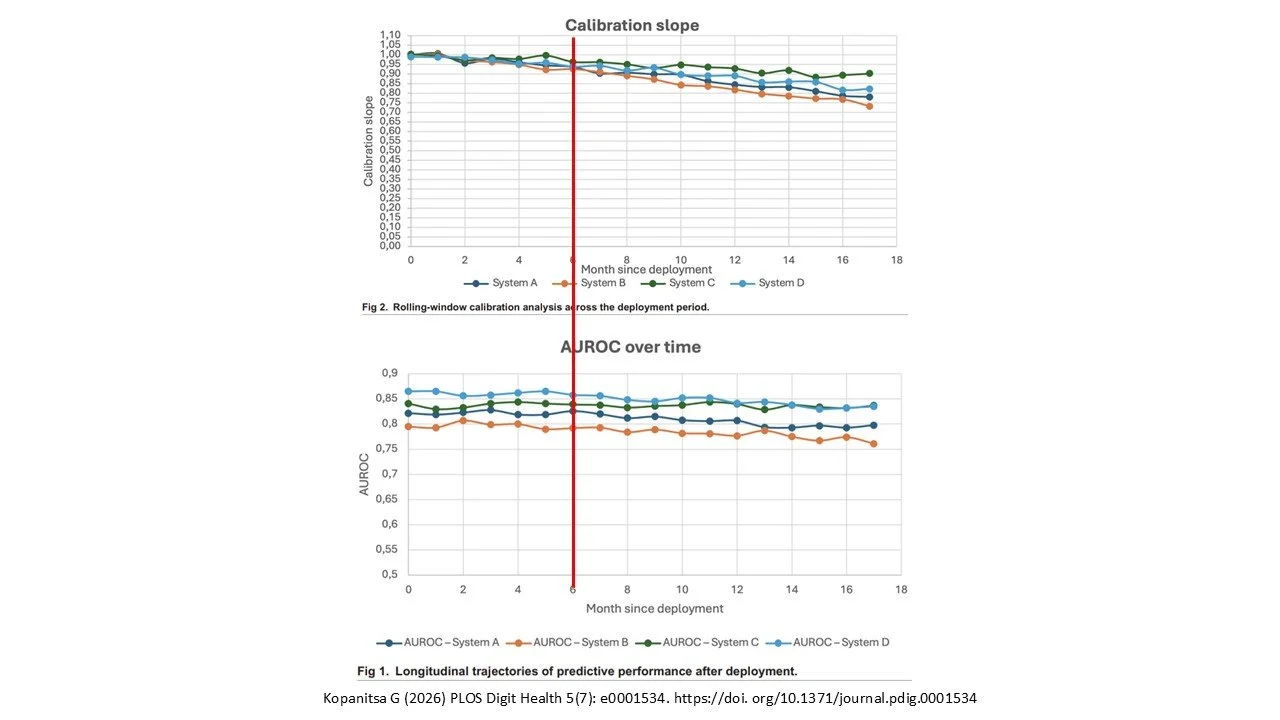
Prediction slope = Indicates if predictions are too extreme or modest; ideal = 1
Prediction Intercept = Indicates if predictions are too high or low, ideal = 0
Are There Early Signals of Model Degradation?
Kopanitsa G (2026) Validation is not enough: Longitudinal evidence of post-deployment fragility in clinical AI systems. PLOS Digit Health 5(7): e0001534. https://doi. org/10.1371/journal.pdig.0001534
Longitudinal, retrospective, observational study
3 phases: Internal validation; early deployment (first 6 months); Late Deployment (after 6 months)
4 clinically deployed AI systems:
A & B: High-frequency EHR predictive acute care models
C: Lab & Diagnostic outpatient decision support model
D: Imaging risk model outcome
68,000 1,240,00 events from 18-24 months
RESULTS:
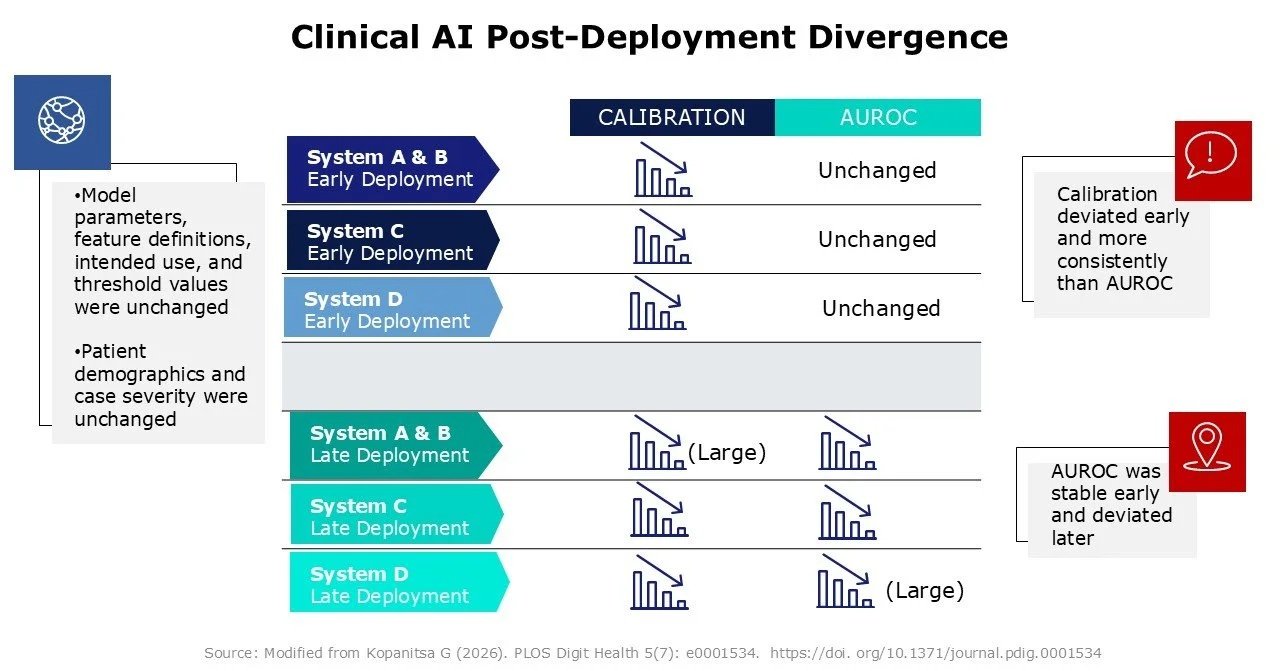
Performance degradation occurred with unchanged model parameters
Calibration changed earlier and more consistently than discrimination (AUROC)
Systems A & B had early calibration changes with negligible AUROC changes
With late deployment, calibration degradation was more pronounced
Discrimination (AUROC) demonstrated a stronger and more consistent deterioration with late deployment
Why Does Post-Implementation Degradation Happen (without model or population changes)?
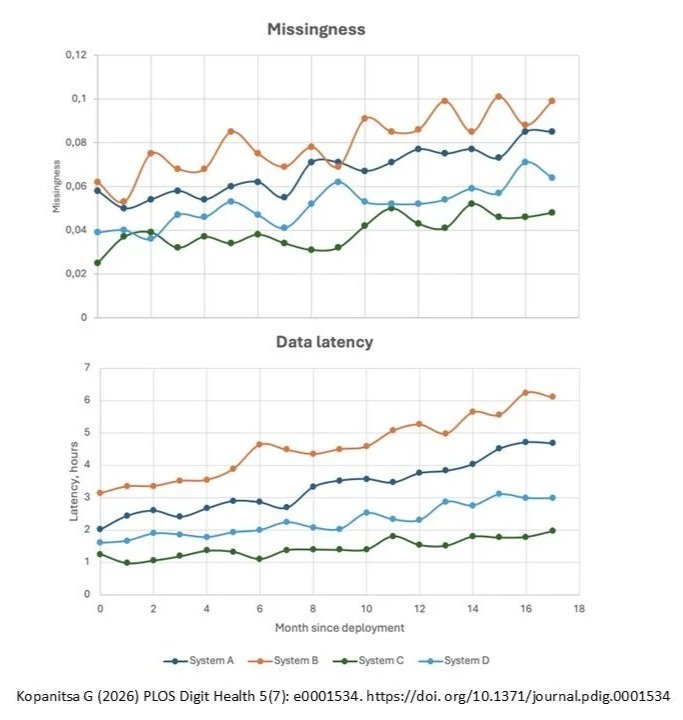
Calibration drift over time was associated with:
Missingness: Missing model inputs at the expected time
Due to information availability to the model
Mainly from time-sensitive inputs (EHR inputs, vital signs, laboratory values, structured documentation fields of clinical workflow)
Data Latency
Implications:
Early changes in calibration make inaccurate estimates about absolute risk
Lack of changes in early AUROC may inappropriately preserve patient rankings
This could lead to delayed clinical deterioration since the AUROC remains in the acceptable range
Operational changes in data gathering, documentation and availability are the primary causes.
PROPOSED SOLUTIONS:
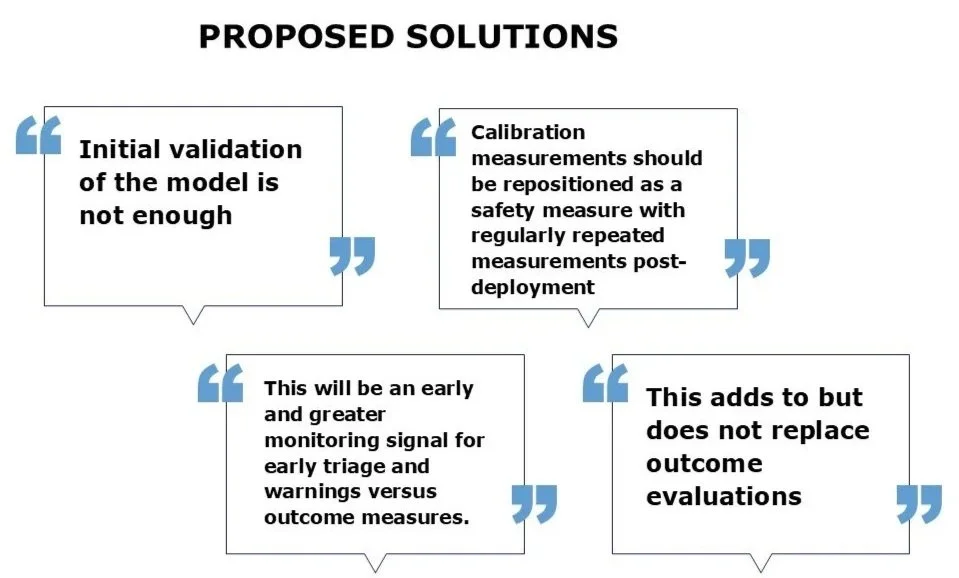
Initial validation of the model is not enough
Calibration measurements should be repositioned as a safety measure with regularly repeated measurements post-deployment
This will be an early and greater monitoring signal for early triage and warnings versus outcome measures.
This adds to but does not replace outcome evaluations
CONCLUSIONS:
A one-time clinical validation does not provide ongoing assurance of model reliability.
Outcomes or AUROC changes may not initially detect changes in outcomes.
Calibration measurements should be added as repeat metrics post-deployment
A robust monitoring strategy should be designed for early identification of shifting early warning signals.
Pre-deployment clinical validation is common for safety and effectiveness.
However, ongoing clinical deployment rarely preserves the initial validation conditions, resulting in the potential for data shift.
Initial validation results cannot guarantee ongoing reliability.
The ability to predict accurate probabilities can change BEFORE the ability to discriminate threshold alert warnings of who will or will not experience an outcome.