Will Artificial Intelligence Replace Clinicians?
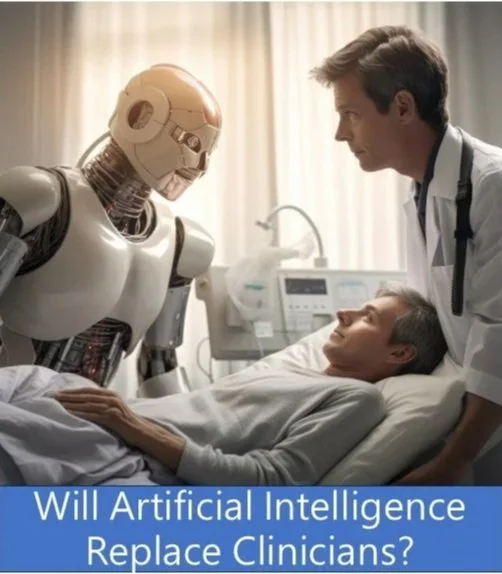
After reading this article, you will be able to discuss the role of artificial intelligence (AI) in healthcare and the increased digital skills clinicians will need to be involved.
SUMMARY:
AI will dramatically change how and when care is provided.
Numerous tools will be available within the digital healthcare space, with limited clinical evaluations.
Development of autonomous AI systems in healthcare settings has raised major concerns about whether such technologies might replace human clinicians
ROLE of AI In CLINICAL CARE
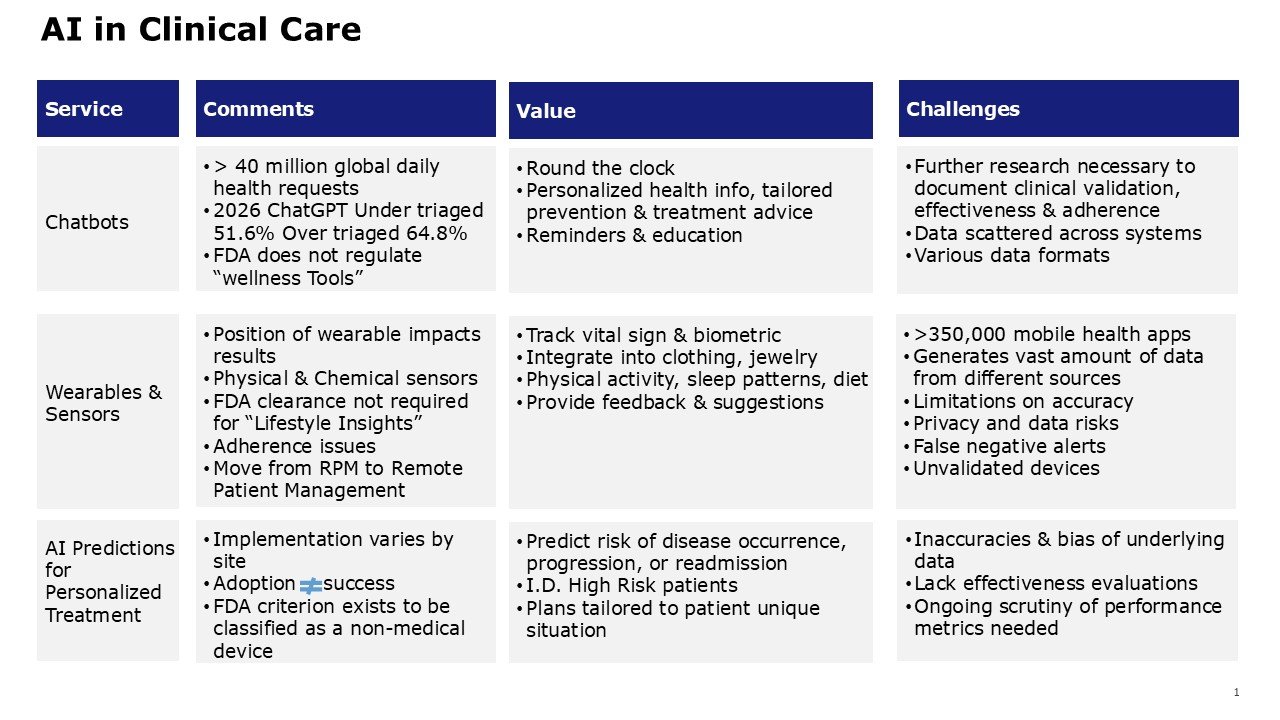
AI tools in healthcare address areas including:
Business Operations (Coding, billing, scheduling)
Direct to Consumer (Chatbots, wearables, sensors)
Clinical (Personalized assessment & treatment recommendations)
Hybrid (Tools serving multiple purposes)
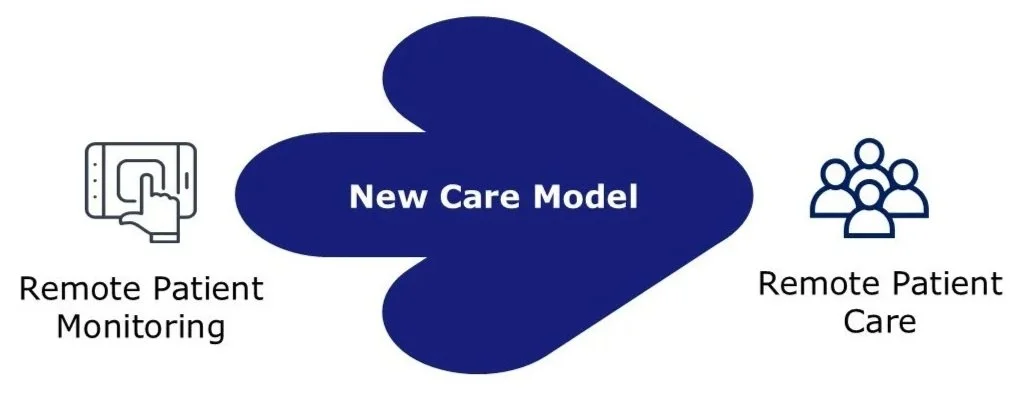
NEED A NEW MODEL:
To drive success, need to shift from RPM as a technology tool to a mode of true care transformation and delivery.
Need to shift focus toward a team-based, protocol-driven program providing total care
Patient Risk Stratification becomes critical.
Consider readmission and clinical deterioration likelihood
Not everyone needs to be remotely monitored/cared for
The New Model: An Inter-collaborative Team
Designed to provide comprehensive integrated strategies to provide coordinated patient management, improve outcomes, and decrease costs.
Patient Centric
Dynamic process
AI Benefits
Develop & share care plans
Answer patients' questions
Secure messaging
Appointment scheduling
Treatment recommendations
Medication titration
Early warning prompts
AI Implementations
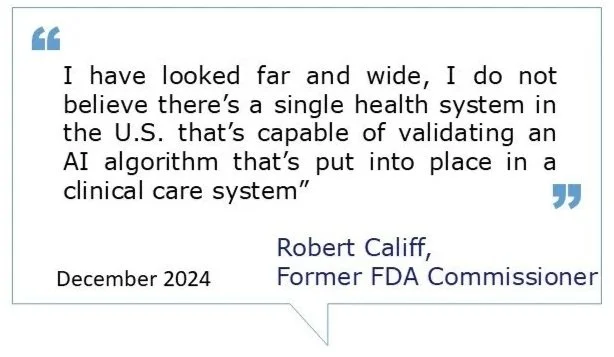
Lack of formal evaluation of programs
Model accuracy
Model Bias
Implementation varies substantially
Needs a tailored strategy as opposed to a “one size fits all” approach
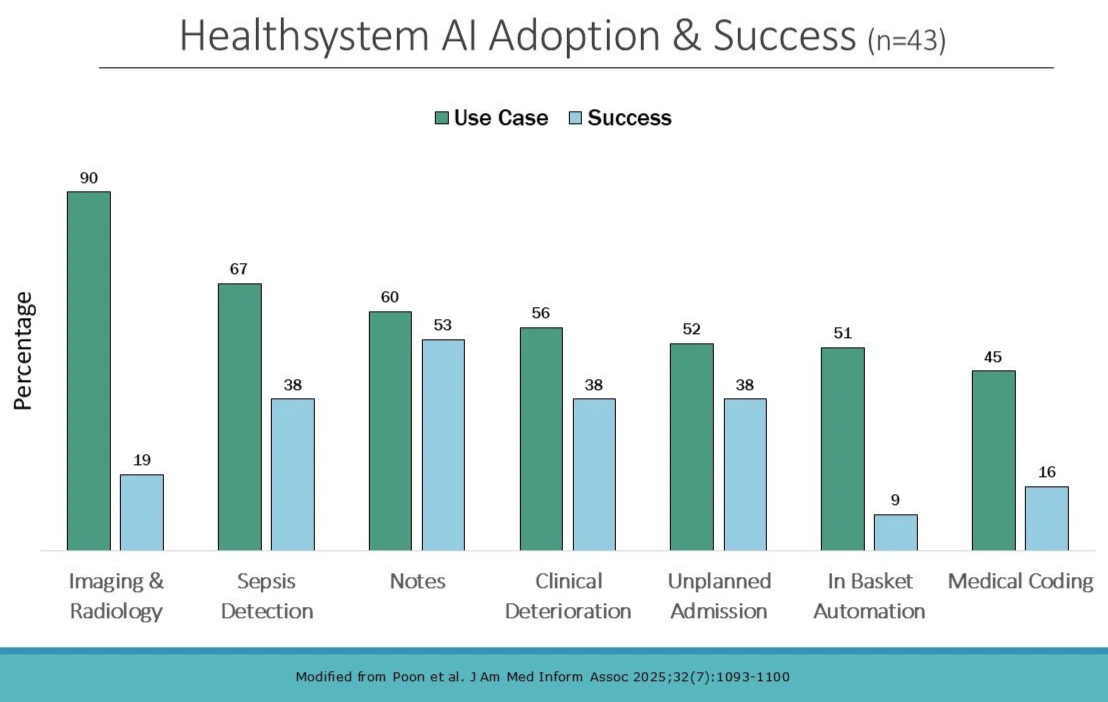
Guidelines on how to ensure optimal use of AI are lacking
Most health systems struggle to develop proper evaluation & monitoring of AI
Processes typically focus on safety & process compliance and not effectiveness
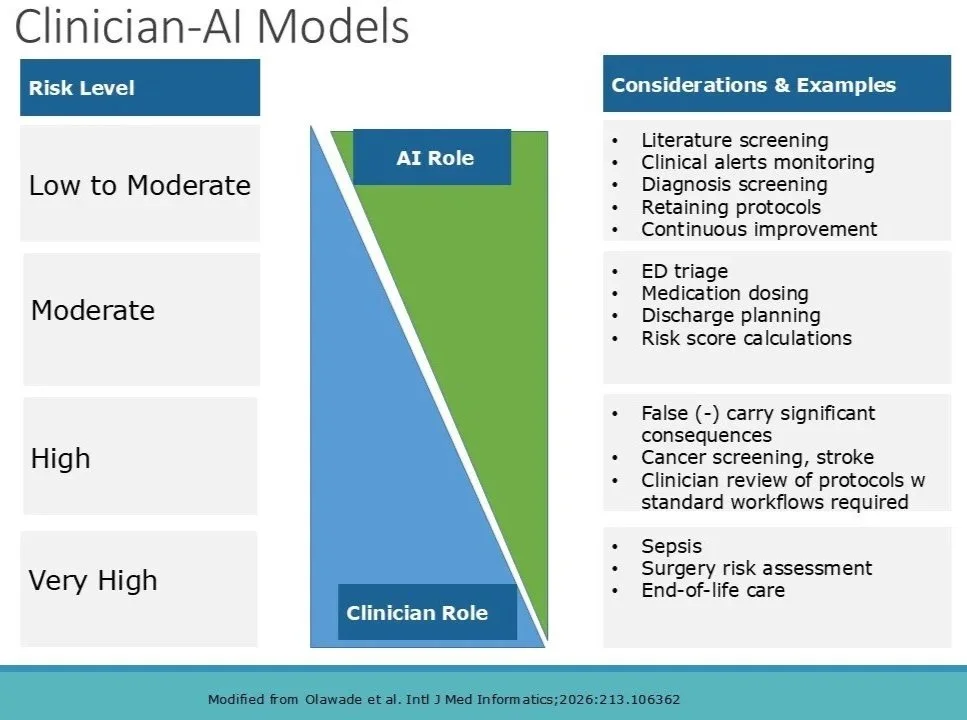
Clinician In The Loop Model (Clinician-AI Collaboration)
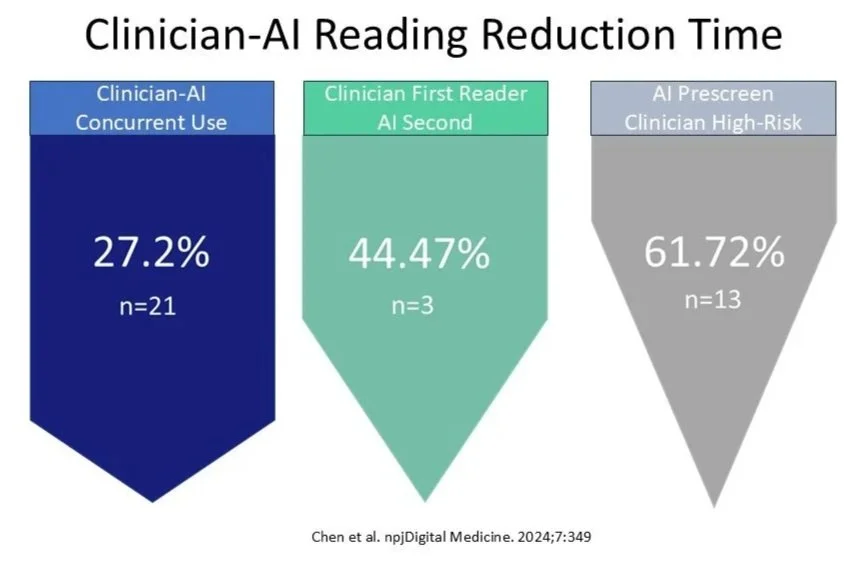
Imaging is the most studied area.
AI integration can impact clinician workload for imaging interpretation and % time saved
How AI Will Change Clinical Practice
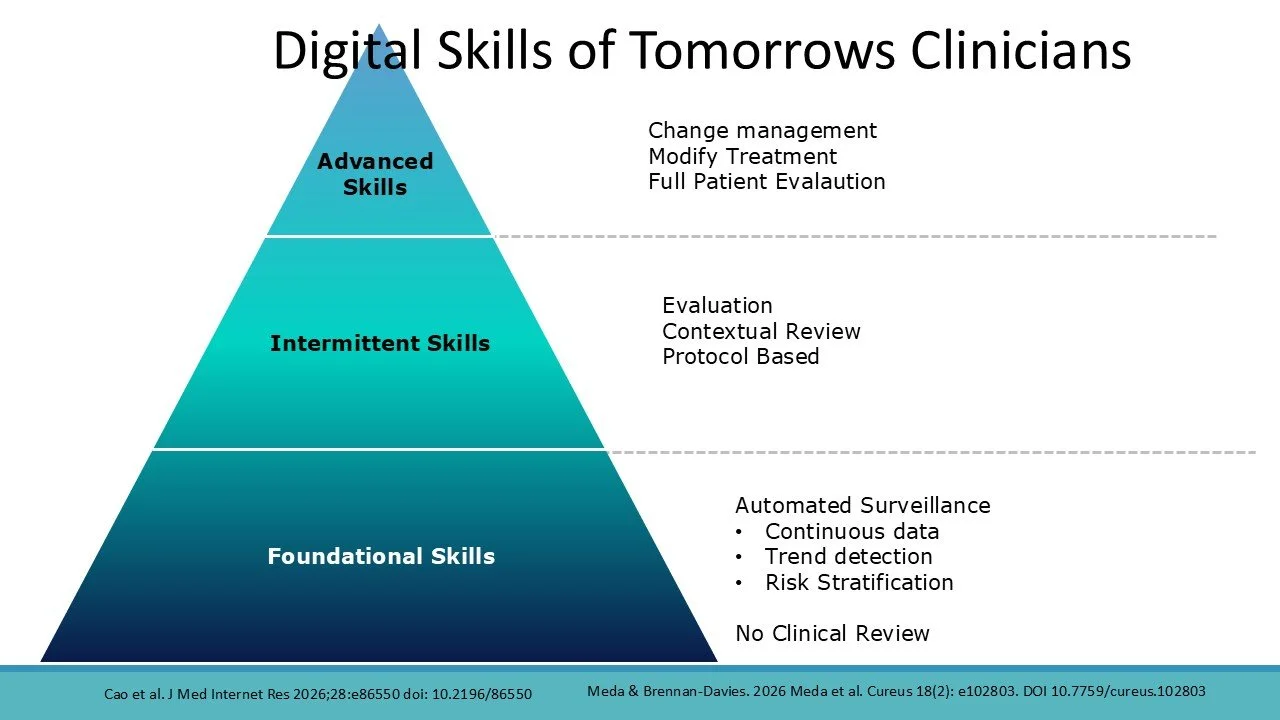
The digital clinician of tomorrow will require an ever-increasing set of digital skills
A shift from data knowledge to data interpretation from digital sources
Responsibilities:
Who will be responsible for monitoring the data?
Who will explain the findings?
Will AI Replace Clinicians
The conversation needs to shift from “Should we” use AI to “How do we use AI”
The future is not replacement but rather collaboration, with AI being another clinical tool to aid in patient care.
AI will not replace clinicians, but clinicians who use AI will replace those who do not.
CONCLUSIONS:
AI is profoundly changing healthcare, from data collection to diagnosis and treatment.
AI should not be considered a single-use innovation.
A coordinated AI strategy is needed to address the known challenges and avoid fragmented, expensive AI mistakes.
AI will not replace clinicians, but clinicians who use AI will replace those who do not.
AI is changing how patients and clinicians interact with the healthcare system.
With few peer-reviewed evaluations, a large challenge exists in which tools need evaluation, how evaluations should be conducted and who is responsible.
Numerous tools are entered into clinical practice with limited or non-existent evaluation and possibly without regulatory review.
Human-in-the-loop interactions are necessary for optimal relationships between clinician and AI algorithms.